GymlyCRM
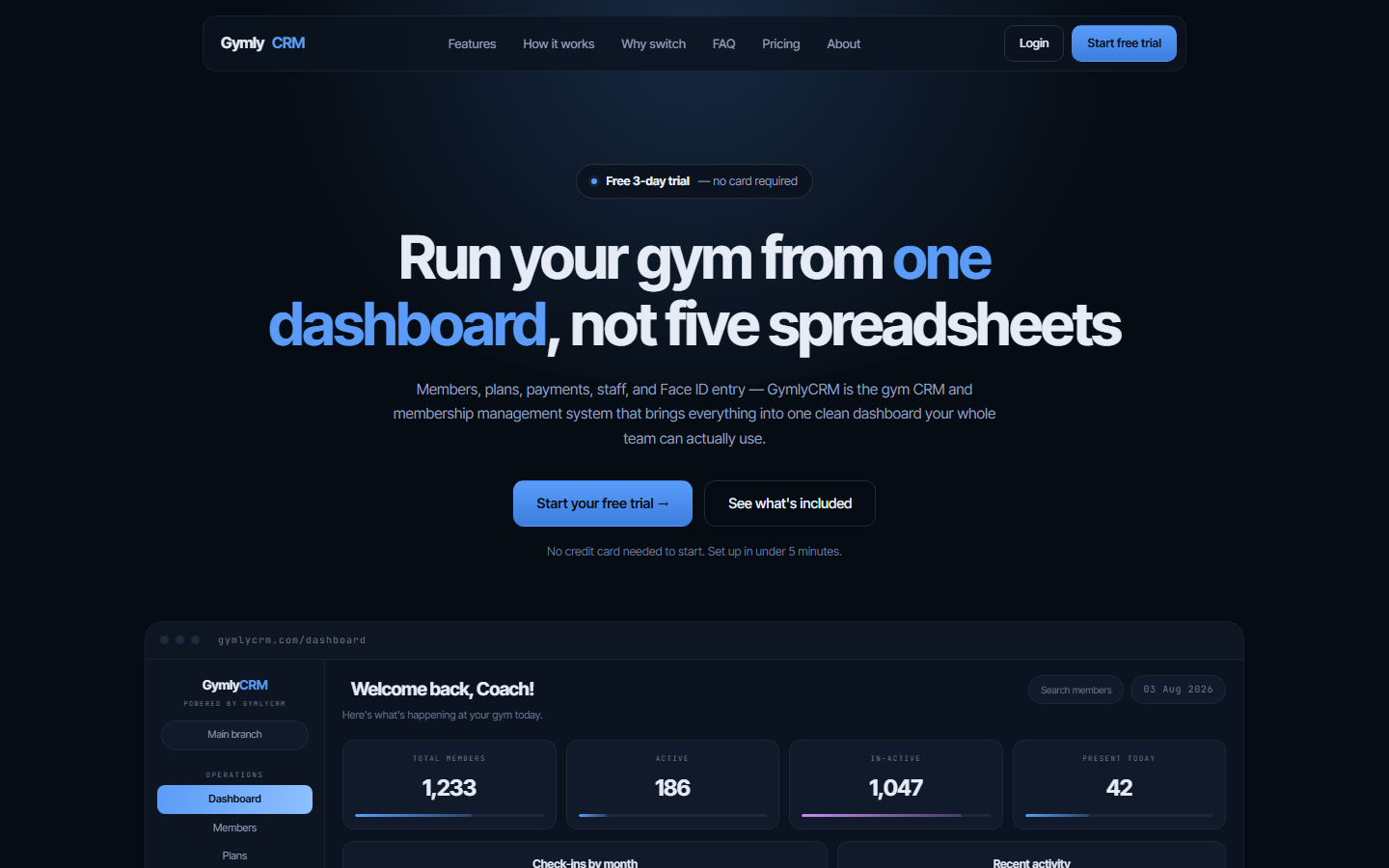
An operator-facing administration system: memberships, billing, attendance and multi-branch records in one place.
- Role
- Design and development
- Stack
- PHP
- MySQL
- JavaScript
- CSS
Creative Frontend Engineer
An operator-facing administration system: memberships, billing, attendance and multi-branch records in one place.
An interactive creative-portfolio site: word-by-word hero reveals, procedural torn-paper section transitions, and a custom GSAP rocket that flies a real, responsive SVG path as the page scrolls.

A personal-brand site for fitness consultant and corporate wellness advisor Muhammad Wasif: consulting and wellness services, a filterable photo archive, a transcribed certifications timeline and a database-backed admin panel for the one setting that actually changes.

A colour rule enforced by review erodes under a deadline. Enforced by a failing build it survives — and it catches a class of defect no amount of looking at the page will find.
A reduced-motion block written after the animations is a block that has to catch up with them. Written first, it binds everything added later — and the hardest decision is what it must deliberately not switch off.
Server components make the default free, which is exactly why the interesting question becomes what earns a client boundary — and how much interactive work you can do after crossing one without ever calling setState.
Two independent attributes on the root element give fourteen appearances from nine declarations — and the test that stops the generated CSS drifting from the registry it came from.
Animating a weight axis instead of opacity or transform gives you motion that never reflows the composition — but it bills you for a relayout on every frame, and the curve you reach for first is the wrong one.
A screenshot tells you what something looked like for one frame. Measuring the live page tells you what it does — and only one of those is enough to rebuild from.

I work on interface reconstruction: taking a demanding, well-made interface apart to understand why it feels the way it does, then building an original that holds up under real conditions. That means measuring computed styles, layout behaviour and interaction timing rather than working from screenshots, and turning what comes back into a token system the rebuild can stand on.
The standard I hold work to is mechanical rather than aspirational. Contrast, horizontal overflow, reduced motion, schema-valid content and unverified claims are all checked by something that fails the build, because a rule that depends on remembering it is a rule that erodes. This site is built the same way it argues for.
UI Engineering
Website Reconstruction
Performance and Quality
AI-assisted Engineering